SRP Federal Credit Union is a financial cooperative that provides financial solutions like loans, investments, savings, credit and debit cards, and online banking, serving members across South Carolina. But between September and November 2024, the credit union became the victim of a cyberattack that compromised highly sensitive member data that may still have lasting consequences.
First time seeing this?

The Incident
Between September 5 and November 4, 2024, SRP Federal Credit Union experienced unauthorized access to its systems. The breach was discovered after suspicious activity was detected on its network, prompting the credit union to launch an internal investigation and notify law enforcement. The investigation concluded on November 22, revealing that cybercriminals had accessed and exfiltrated large volumes of data over a two-month period.
SRP publicly disclosed the breach in December 2024, stating that approximately 240,742 individuals were affected, with reports suggesting the total may have reached over 260,000. The compromised data was not isolated to one department or function, leading to major concerns about the extent of the breach.
The Hack
A ransomware group known as Nitrogen took credit for the attack, claiming to have stolen 650 GB of data from SRP’s systems. The group published proof of their access on their dark web leak site and demanded a $400,000 ransom, a demand SRP has neither confirmed nor denied. Based on SRP’s actions (not paying, notifying victims, and offering credit monitoring), experts believe the ransom was not paid.
The stolen data reportedly included:
Full names
Social Security numbers
Dates of birth
Driver’s license numbers
Account numbers and financial information
Credit and debit card details
Credit ratings and scores
Though SRP emphasized that its online banking and core processing systems were not affected, the compromise of highly personal and financial information puts victims at significant risk.
The Impact
On Victims
The stolen data creates a high risk of identity theft and fraud. While no confirmed fraud incidents have been publicly linked to the SRP breach so far, the scope of the stolen data increases the likelihood of:
Unauthorized bank transactions
Fraudulent credit or loan applications
Phishing and scam attempts
Personal data being sold on the dark web
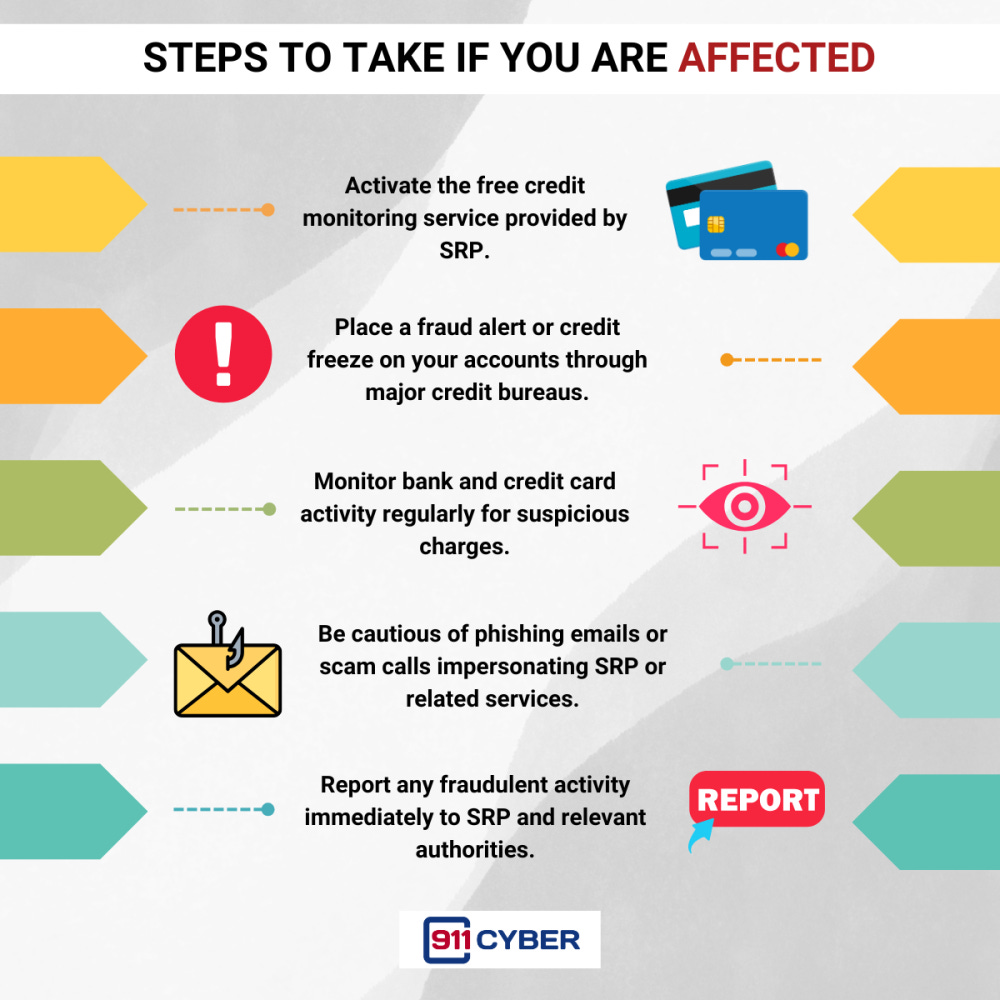
SRP offered 12 to 24 months of Experian IdentityWorks credit monitoring to affected individuals and advised them to monitor their accounts, place credit freezes or fraud alerts, and report suspicious activity.
On the Credit Union
In addition to reputational damage, SRP now faces legal consequences:
A class-action lawsuit was filed in U.S. District Court in December 2024. Plaintiffs allege SRP failed to implement adequate security measures and delayed notification, increasing risk for victims.
Several law firms have launched parallel investigations and are seeking to represent affected consumers.
Regulatory filings were made with multiple states, including Maine and Texas, and law enforcement continues to monitor the situation.
While no regulatory fines have been issued as of April 2025, the incident is likely under review by federal oversight bodies like the National Credit Union Administration (NCUA) and state attorneys general.
The Response
SRP’s Immediate Actions:
Contained the breach by securing systems
Hired third-party forensic investigators
Notified law enforcement and regulatory bodies
Began sending breach notification letters to members
Offered free credit monitoring and identity theft protection
Long-Term Remediation:
Implemented undisclosed but reportedly stronger security measures
Increased network monitoring
Launched customer support hotlines for breach-related concerns
SRP has continued to assure members that it’s committed to securing their data and preventing similar incidents.
What You Should Do Now
If you are a customer of SRP Federal Credit Union and received a breach notification, while it may be too late, you can still:
Takeaways for Businesses
Sensitive Data Is a Prime Target Ransomware groups like Nitrogen don’t just want access, they want leverage. SRP’s breach exposed high-value personal and financial data that can fuel years of identity theft.
Delayed Detection Increases Risk The attackers had access to SRP systems for nearly two months. Swift detection, containment, and public disclosure are essential to minimizing harm.
Silence Won’t Shield You Although SRP has not confirmed whether ransomware was involved, the public claim by Nitrogen and dark web leaks amplified scrutiny. Transparency matters.
Legal Fallout Is Inevitable If your business holds consumer data, assume you’ll be sued if it’s breached. Prevention is cheaper than litigation.
Cybersecurity Is a Continuous Investment Strengthening systems after a breach is necessary, but often too late. Proactive audits, up-to-date infrastructure, and comprehensive response plans are essential.
What This Means Moving Forward
The SRP Federal Credit Union attack adds to a growing list of financial institutions targeted by cybercriminals. With ransomware groups like Nitrogen ramping up activity, the risk to sensitive financial data is rising fast. The breach may result in lasting damage, not just for SRP’s reputation and finances, but for the identities of over 240,000 affected individuals.
As this case continues to evolve through legal and regulatory channels, one thing is clear: cyber risk is business risk. And for credit unions like SRP, the cost of unpreparedness can be measured in gigabytes stolen, trust lost, and lawsuits filed.
Stay tuned as we uncover more real-life digital horrors on Cybercrime Stories.
Subscribe and Comment.
Copyright © 2026 911Cyber . All Rights Reserved.
Follow 911Cyber on: