Welcome to CyberHygiene, my weekly newsletter, where I share tips and actionable data to help everyone stay safe online.
Instant messaging apps aren’t just a convenience. They’ve become the glue holding together communication in our personal and professional lives. With over 5 billion active users globally on apps like WhatsApp, Messenger, and Telegram, it’s safe to say that these platforms aren’t going anywhere. Whether you’re sending a quick text, sharing a meme, or discussing business strategies, messaging apps have become the go-to tool for communication. But, how secure are they? Can we trust that our private conversations are truly private? Or are we just one hack away from having our most personal chats splashed across the internet? 🤔
Let’s dive into the privacy and security aspects of one of some of the most popular instant messaging apps, and explain why Signal is gaining trust, even from high-profile individuals like government officials. Let’s get started!
Why is Signal Trusted?
The answer is simple: Signal puts privacy first. No backdoors, no data harvesting, and definitely no ads. Unlike other messaging apps, Signal’s main goal is to keep your conversations private and secure. It doesn’t sell your data or use it to target you with ads.
But it’s not just the government types who are jumping on the Signal bandwagon. People who value their privacy and security, like privacy advocates and tech experts, swear by it. So, what makes Signal the go-to choice for those who need to keep their conversations on lockdown?
The Security and Privacy Pros of Signal
Signal’s security measures are robust, and it’s not just talk. Here’s what makes it stand out from the crowd:
End-to-End Encryption by Default
Signal uses end-to-end encryption (E2EE) to make sure that only the sender and receiver can read the message. This means even if someone intercepts the message on its way to the recipient, it’ll be unreadable. Not even Signal can access your messages.
Minimal Metadata Collection
Most messaging apps collect metadata (like who you’re talking to, when, and for how long). Signal collects very little of this: just the date and time your account was created. That’s it. So, if your messages are ever subpoenaed, there’s little for authorities to dig through.
Open Source
Signal is open-source, which means anyone can look at its code and check for vulnerabilities or backdoors. This transparency makes it harder for anyone (even Signal’s team) to secretly collect data or insert malicious code.
Self-Destructing Messages
Want to send something and then forget about it? Signal allows you to set self-destructing messages that disappear after a set time. It’s like sending a message and hitting the “delete” button, but it’s a lot cooler.
How Does Signal Differ from Other Apps?
Now, let’s compare Signal to the usual suspects: WhatsApp, Messenger, iMessage, and Telegram. Sure, they all offer messaging features, but how do they stack up in terms of security and privacy?
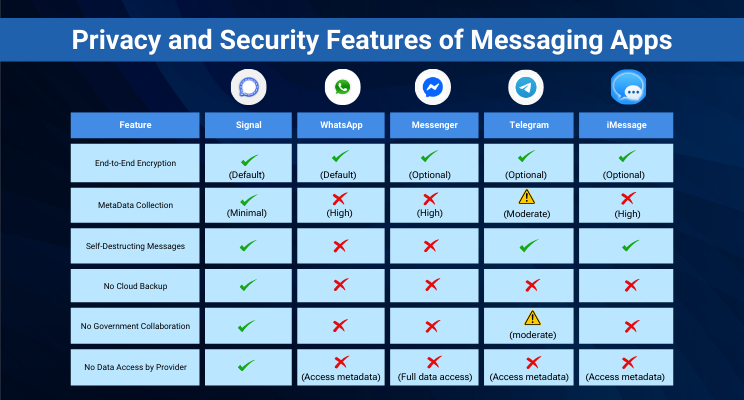
Signal clearly comes out on top in terms of security and privacy, particularly because of its default end-to-end encryption, minimal metadata collection, and open-source transparency. WhatsApp, Messenger, and iMessage are all owned by large companies (Facebook and Apple) that may collect more data for advertising or compliance with government requests. Telegram falls somewhere in the middle, offering encryption but not by default, and it can access some data when required.
Is Signal Bulletproof? The Security and Privacy Risks
The answer is no. No app is entirely bulletproof, and Signal is no exception. While it is incredibly secure, there are still risks and limitations to be aware of:
Phone Number Registration
Signal requires a phone number to register, which can be linked back to your identity. If someone knows your number, they could potentially track your activities across different platforms, even if the messages themselves are secure.
Device Security
Signal relies on the security of your device. If your phone is compromised, hackers can gain access to your messages. Using a secure phone and enabling features like two-factor authentication is essential to protect yourself.
Targeted Attacks
No app can guard against targeted attacks, like SIM-swapping. If someone gets access to your phone number, they could potentially bypass Signal’s security and gain access to your messages.
But don’t panic! 🛡️ The risks are manageable, especially if you follow the best practices below.
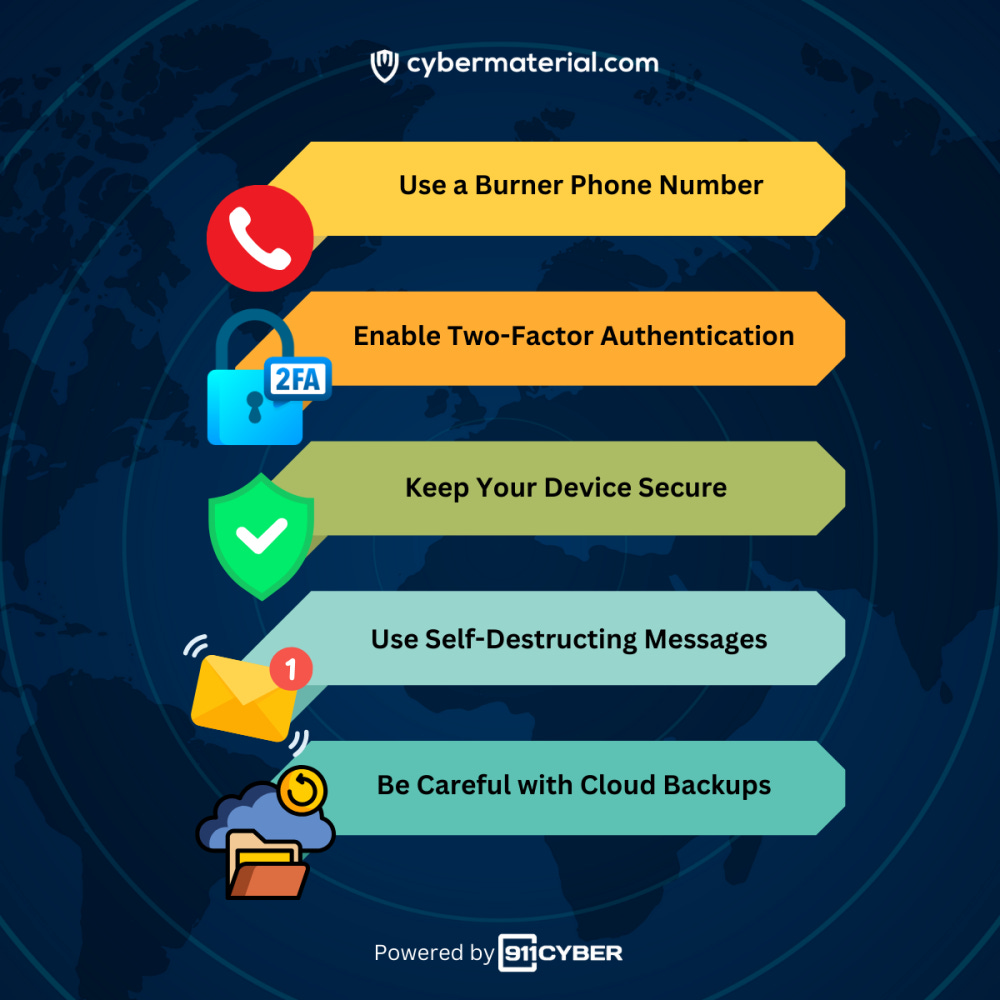
Best Practices to Reinforce Security and Privacy While Using Instant Messaging Apps
Use a Burner Phone Number
If privacy is paramount, consider using a burner phone number that isn’t tied to your real identity. This keeps your Signal account more anonymous.
Enable Two-Factor Authentication (2FA)
Add an extra layer of security by enabling 2FA. This requires a second form of verification (like a code sent to your email or phone) when logging in, making it harder for someone to access your account.
Keep Your Device Secure
If your phone gets hacked, everything is at risk. Make sure your phone’s security features are up to date and use features like Face ID or fingerprint scanning to keep prying eyes away.
Self-Destructing Messages
Use self-destructing messages for sensitive conversations, especially those you don’t want lingering around. Messages disappear after a set time, making it harder for anyone to retrieve them.
Be Careful with Cloud Backups
Avoid using cloud backups for sensitive chats. While they’re convenient, they can also expose your messages to hacking or government access. Keeping messages stored locally on your device is a safer option.
Take Control of Your Digital Privacy and Security
With personal data constantly being traded, taking control of your digital privacy and security has never been more crucial. Signal is a powerful tool that puts your privacy first, but it’s not invincible. By understanding the risks, using the right security practices, and staying informed about the apps you use, you can drastically reduce the chances of your data being exposed.
The digital world is a fast-moving one, and while no app can guarantee 100% security, Signal is as close as it gets. So, take control of your conversations today. Your privacy is worth it. 💬🔒
Stay secure, and don’t let your messages come back to haunt you!
What resources are available to help you communicate online privately and securely?
Books and Documents:
Metadata 102 - What is communications metadata and why do we care about it? by Anastasia Kolobrodova
Podcasts:
Which Messaging App is Truly Secure? by Robert Evans, Garrison Davis, and James Stout
