
The hospitality sector is a goldmine for cybercriminals. It holds vast volumes of personally identifiable information (PII), credit card data, and loyalty program credentials. In recent years, we’ve seen major hotel chains suffer data breaches that compromised millions of guests. But it’s not just the big players being targeted. Small, independent venues are often seen as easier targets due to weaker defenses.
Even the guest experience has become an attack surface. From phishing emails disguised as booking confirmations to rogue Wi-Fi networks in hotel lobbies, guests can be exposed at every step of their stay.
In this edition, we break down the most common cyber risks facing hospitality professionals today, and offer practical, no-nonsense tips to protect your business, your staff, and your guests.
Because in hospitality, trust is everything, and digital safety is now a part of that promise.
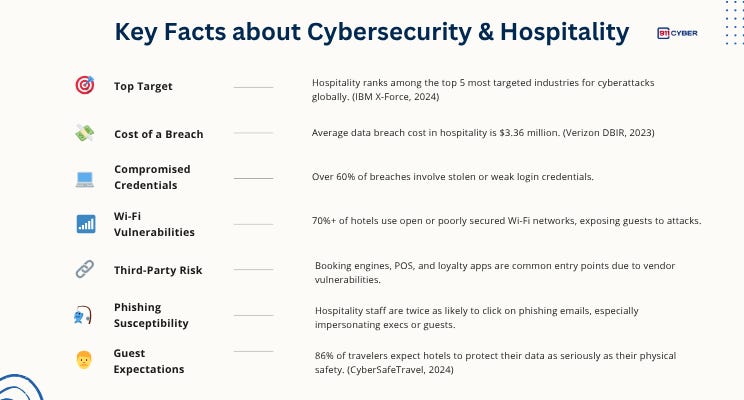
🛡️ Key Facts about Cybersecurity & Hospitality
💣 Common Threats in the Hospitality Sector
Cybercriminals are increasingly targeting hospitality staff through social engineering, especially at the front desk and concierge. Attackers often pose as IT teams, executives, or vendors to manipulate employees into revealing sensitive information or taking urgent actions like resetting passwords or sharing guest data. A common tactic involves phishing emails or phone calls that appear to come from internal leadership. One real-world example involved an attacker impersonating a hotel manager to request a VIP guest list, which was unknowingly shared. These low-tech attacks are highly effective and require only a single employee’s mistake to compromise a system.
Beyond staff-targeted scams, hospitality businesses face serious technical vulnerabilities. Many hotels still offer unencrypted guest Wi-Fi, creating opportunities for eavesdropping and man-in-the-middle attacks. Booking platforms are also a growing concern, with attackers using fake confirmations or spoofed websites to trick guests into giving up personal information. Point-of-sale systems used in restaurants, spas, and shops are often exploited by malware or skimming devices. Even the core infrastructure of many properties is at risk, as outdated operating systems and poor patch management leave the door open to ransomware and data breaches. These threats can lead to major financial loss, reputational damage, and loss of guest trust if not addressed with proactive cybersecurity measures.
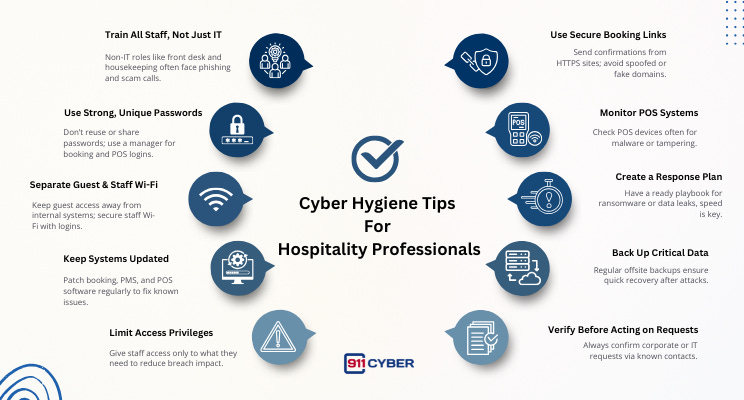
💡 Practical Cyber Hygiene Tips for Hospitality Professionals
🏨 Why Cybersecurity Matters in Hospitality
Hospitality is a people-driven industry, which makes the human factor one of its greatest strengths, and also one of its biggest vulnerabilities. Employees across departments handle sensitive guest data every day, from front desk agents entering passport details to housekeeping staff using connected devices. Without proper training and awareness, a simple mistake like clicking a phishing email or using a weak password can lead to serious consequences. At the same time, hospitality businesses must comply with strict data protection laws such as GDPR, CCPA, and PCI DSS, which require responsible handling of personal and financial information. Failure to meet these standards can result in hefty fines and a loss of public trust. Cybersecurity in hospitality is not just about systems and software, it is about building a culture of privacy, responsibility, and compliance at every level of the organization.
🧰 What Cybersecurity Resources Can Hospitality Professionals Rely On?
📚Books
Cybersecurity for Hotels: and Corporate Offices (2017) by Steffen Kroehl
Digital Transformation and Hospitality (2023) by Zera Schmidt
🎙️ Podcasts
Matt Talks Ep. 32 Cybersecurity in Hospitality with Joshua Edwards by Matthijs Welle, Mews
Retail & Hospitality ISAC Podcast by Luke Vander Linden and RH-ISAC
Luxury Getaways, Looming Threats: Cybersecurity in the Caribbean Hospitality Industry by Jen Stone, SecurityMetrics Podcast
▶️ Videos
Data Protection and Cyber Security Considerations in the Hotel Industry with Todd Johnstone by Robin Trimingham, Hotels Magazine
🧠 Final Thought
Cybersecurity is no longer just the responsibility of IT teams. It is now a core part of delivering safe and high-quality hospitality. Whether you manage the front desk, handle reservations, or oversee operations, every staff member plays an important role in protecting guest data and the reputation of your business.
Emerging technologies like AI offer powerful tools to detect threats faster, automate routine security tasks, and provide personalized protection. However, AI can also be exploited by attackers to create more convincing phishing scams or automate attacks. This makes human awareness and vigilance more important than ever.
By staying informed, following strong cyber hygiene practices, and building a culture of security and trust, hospitality professionals can turn a major risk into a strength. Today, providing a secure digital environment is just as essential as offering comfort and excellent service.
