A dating website for extramarital affairs became ground zero for digital exposure, mass extortion, and psychological devastation. In 2015, a mysterious group known as “The Impact Team” breached Ashley Madison, a platform promising secrecy for people seeking affairs. They didn’t steal any money; instead, they weaponized trust. The hackers exposed the personal lives of 36 million users and detonated a scandal that would reverberate through cybersecurity, social media, and even global law enforcement.
In this edition of Cybercrime Stories, we dissect the Ashley Madison breach and what made it so explosive.
First time seeing this?

What Was Ashley Madison?
Ashley Madison, founded in 2001, branded itself around infidelity. Its slogan, “Life is short. Have an affair,” made it one of the most controversial dating platforms ever. By 2015, it had over 37 million users and was preparing for an IPO. Run by Toronto-based Avid Life Media (later renamed Ruby Corp.), the site monetized secrecy, charging extra for things like profile deletion and anonymous browsing.
The platform promised privacy. The hackers proved otherwise.
The Hack
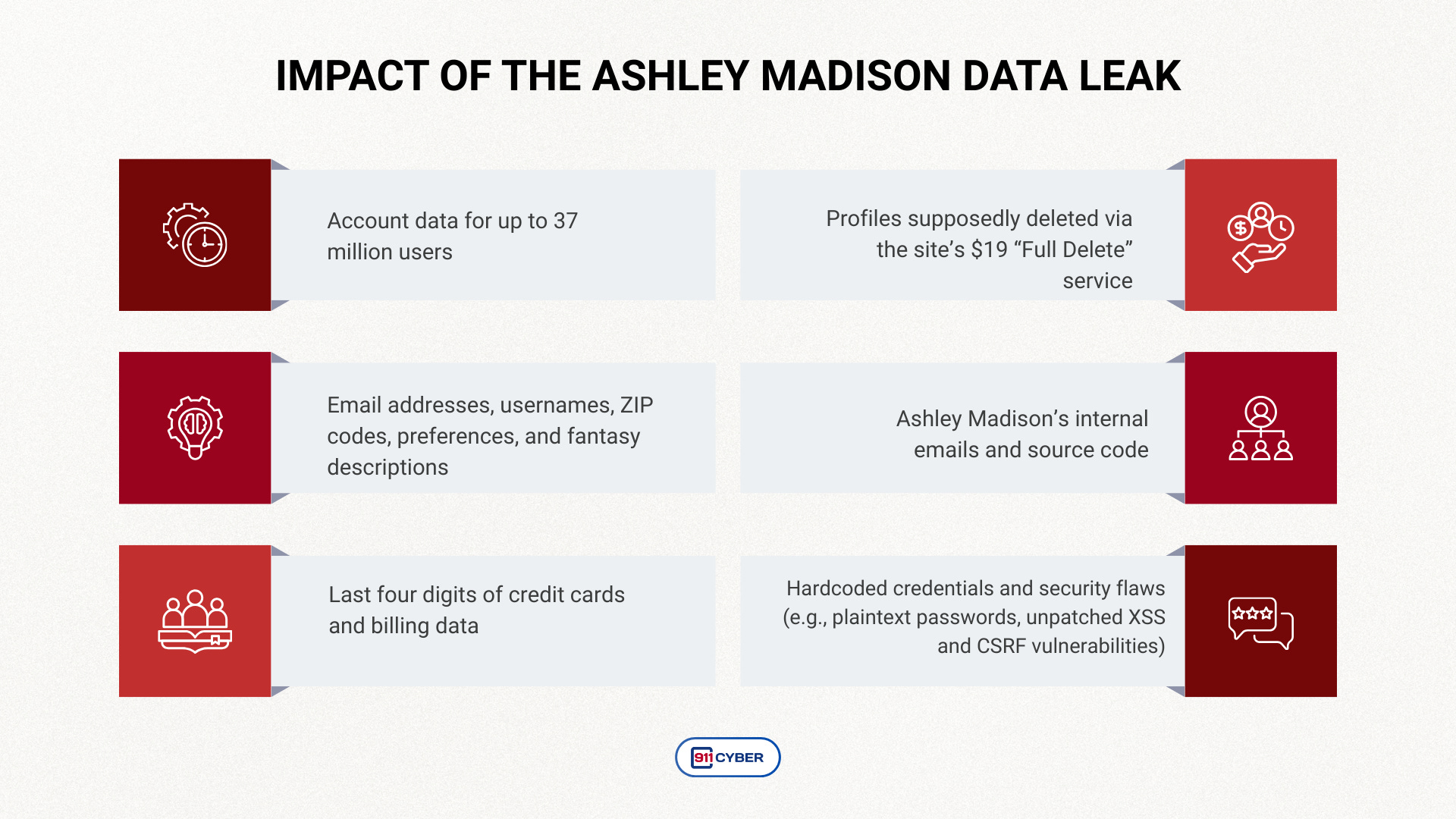
On July 12, 2015, Avid Life Media employees logged into their systems only to be greeted by a ransom note and AC/DC’s “Thunderstruck” blasting on loop. A group calling itself “The Impact Team” had infiltrated Ashley Madison’s internal network. Their demand was to shut down Ashley Madison and its sugar-dating sister site, Established Men, or they’d leak everything.
A week later, the hackers publicly announced the breach. And a 30-day countdown began. Avid Life Media refused to pay the ransom. The hackers followed through.
On August 18 and 20, nearly 80 GB of sensitive data, which included names, emails, partial credit card data, sexual preferences, internal corporate emails, and even source code, was dumped online.
What Was Leaked?
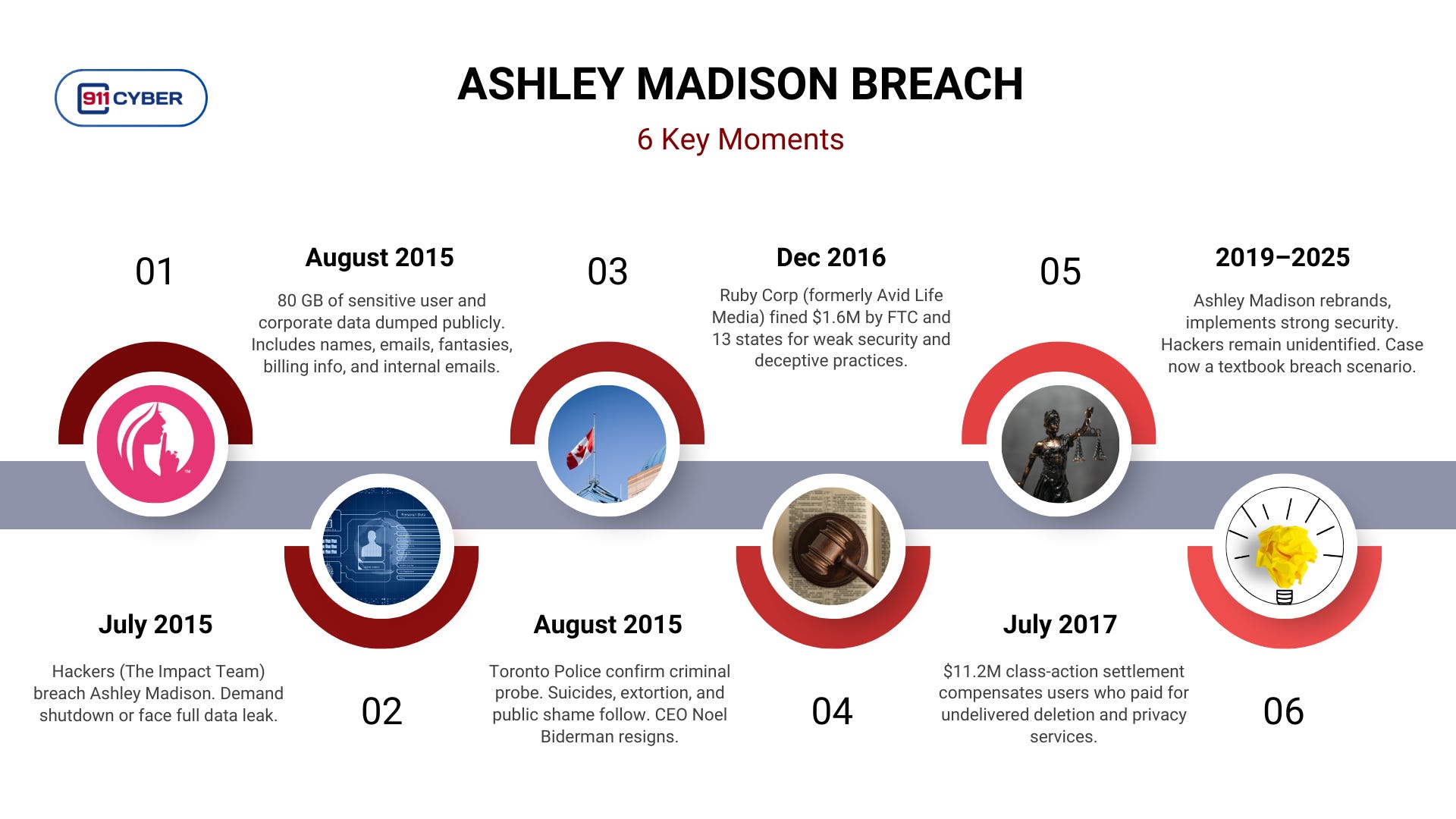
The Impact Team exposed data from up to 37 million Ashley Madison users, including email addresses, usernames, ZIP codes, sexual preferences, billing info, and even accounts that users had paid to delete. They also leaked internal emails, source code, and hardcoded credentials, revealing major security flaws like unpatched XSS and plaintext passwords.
The breach even revealed that many “female” users were fake, created by bots or employees. According to the FTC, as many as 16 million of 19 million female profiles were falsified.
The Hackers
The Impact Team didn’t ask for Bitcoin. Their motivation was a moral one or so they claimed it to be. In their manifesto, they accused Ashley Madison of:
Profiting from adultery
Lying about user anonymity
Creating fake profiles to entrap men
Charging for deletions that weren’t actually performed
Their message: “Too bad for ALM, you promised secrecy but didn’t deliver. Despite a $500,000 reward, no arrests were made. As of 2025, the hackers remain unidentified. Many believe insider knowledge played a role.
The Fallout
The Ashley Madison breach didn’t just ruin reputations. It ruined lives.
Public Shaming
Millions were outed for signing up. Divorce filings surged. Celebrities, clergy, teachers, and civil servants were named.
Mental Health Crisis
Toronto Police linked two suicides to the breach. A pastor in Louisiana, exposed by the dump, ended his life citing the leak in his suicide note.
Extortion
Criminals scraped the leaked data and demanded Bitcoin from users, threatening exposure. Some created scam websites charging fees to “remove” data that couldn’t actually be deleted.
Professional Consequences
Military (.mil) and government (.gov) email addresses were found in the dataset. In countries like Saudi Arabia, adultery carries legal penalties. Making this not just embarrassing, but dangerous.
The Response
Avid Life Media:
Declared the breach a “criminal act.”
Refused to shut the site down
Offered the “Full Delete” for free post-breach
Cooperated with Toronto Police, the RCMP, and the FBI
Hired Deloitte to rebuild security from scratch
CEO Noel Biderman resigned weeks after his emails were leaked
Law enforcement warned users not to download or search the leaked data due to embedded malware on copycat sites.
Legal & Regulatory Fallout
Class Action Lawsuits
In 2017, Ruby Corp. (Ashley Madison’s new name) agreed to an $11.2 million settlement for breach of privacy and false advertising. The payout was split among affected users who had paid for deletion or premium features.
FTC and State Penalties
In December 2016, the FTC and 13 U.S. states fined the company $1.6 million. The charges included:
Falsely claiming 100% discretion
Using fake female accounts (fembots) to boost engagement
Misleading customers about data deletion
Ruby Corp. agreed to 20 years of third-party security audits and consumer protection monitoring.
Global Oversight
Canadian and Australian privacy authorities issued their own sanctions, mandating improvements in data protection and transparency.
Rebuilding the Brand
Ashley Madison didn’t disappear; they just rebranded.
Key reforms post-breach:
Two-Factor Authentication (2FA) was introduced
Profiles are now verified to reduce bots and fake accounts
Data is encrypted both at rest and in transit
“Discreet photo sharing” allows users to blur and unblur images with permission
Annual penetration tests and a bug bounty program were launched
Compliance achieved with PCI-DSS and alignment with the NIST cybersecurity framework
The slogan changed from “Have an affair” to the more neutral “Find your moment”
As of 2025, Ashley Madison claims over 65 million total users, with millions still active, focusing on “open-minded dating”
In branding, the slogan changed from “Have an affair” to the more generic “Find your moment.” Still, the platform continues to cater to “open-minded dating.” Despite the breach, Ashley Madison claims over 65 million total users as of 2025, with millions still active.
Lessons for Cybersecurity Leaders
Security Theater Fails
A fake “Trusted Security” badge and unpatched code won’t fool hackers or regulators.
Never Monetize Deletion
Charging for data deletion that isn’t truly implemented is a lawsuit (and breach) waiting to happen.
Social Fallout Is Part of Cyber Risk
This breach shows that cyberattacks can trigger trauma, suicide, and public ruin, not just financial loss.
Attribution Can Be Elusive
A decade later, the Impact Team remains unidentified. Some speculate insider knowledge, but no arrests have been made. It’s a sobering reminder that not all cybercriminals are caught.
How Daters Can Protect Their Privacy
Whether you’re on Tinder, Tea, Bumble, or Ashley Madison 2.0, digital dating carries real risks.
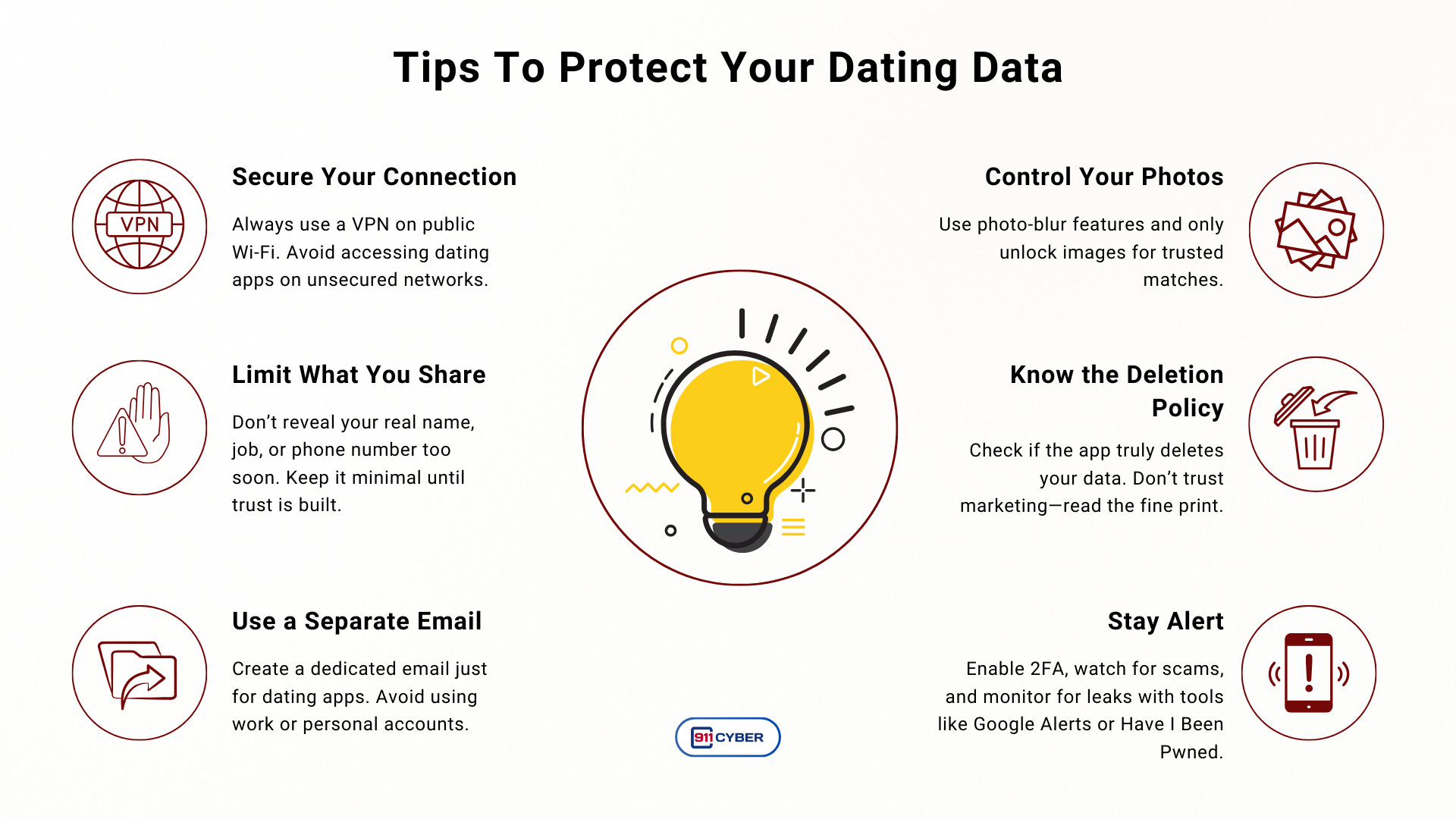
Bottom line: In digital dating, nothing is truly “private.” Assume your data can be stolen and act accordingly.
Final Takeaway
The Ashley Madison breach was a moral earthquake. It tested how we think about privacy, shame, justice, and the limits of cybersecurity. By exposing the gap between marketing promises and real security, it forced companies to think harder about consent, deletion, and privacy.
A site built on secrecy learned the cost of its exposure. A company focused on affairs was forced into transparency. A decade later, the scars are still visible not just on social media, but also in relationships, and across cybersecurity case law.
Stay tuned as we uncover more real-life digital horrors on Cybercrime Stories.
Subscribe and Comment.
Copyright © 2026 911Cyber . All Rights Reserved.
Follow 911Cyber on: