Welcome to CyberHygiene, my weekly newsletter, where I share tips and actionable data to help everyone stay safe online.
In 2024, romance scams resulted in 17,910 complaints to the FBI’s Internet Crime Complaint Center (IC3), with reported losses exceeding $672 million. This deeply harmful crime affects people of all ages, from teens to seniors. Those aged 60 and above were especially impacted, accounting for 7,626 complaints and more than $389 million in losses. These numbers highlight not only the massive financial toll but also the widespread vulnerability that scammers continue to exploit. As these schemes grow more sophisticated, often using tools such as artificial intelligence, understanding how they operate and how to protect yourself is more critical than ever.
What is Confidence/Romance Scam?
Confidence or romance fraud is a scheme where a scammer establishes a trusting relationship, often romantic, with a victim online. This can start on social media, dating apps, or even online job sites. The scammer cultivates the relationship, often expressing strong emotions quickly and making future plans that never materialize. The goal is to gain the victim’s trust and affection to exploit them for financial gain. The scammer essentially preys on the targeted individual’s “heartstrings”.
Why Do So Many People Fall for Romance Scams?
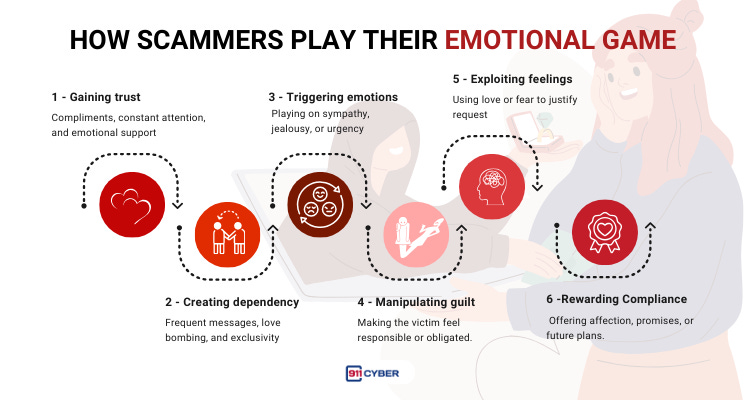
Falling victim to a romance scam is not a sign of weakness; rather, it’s a testament to the sophisticated tactics employed by these criminals, who are experts at social engineering and manipulation. Scammers invest time in understanding their targets, often using information victims share online to build a seemingly genuine connection. They create compelling, often elaborate, backstories and can be very patient, fostering the illusion of a real relationship. Human nature’s desire for trusting relationships makes people of all ages vulnerable. The scammer’s ability to appear genuine, caring, and believable, combined with promises of a loving future, can make it incredibly difficult for victims to recognize the deception. In some cases, the promise of financial gain tied to the “relationship” might also play a role.
How to Prevent Yourself from Being a Victim of Romance Scam
Scammers exploit human psychology and the complex nature of crypto.
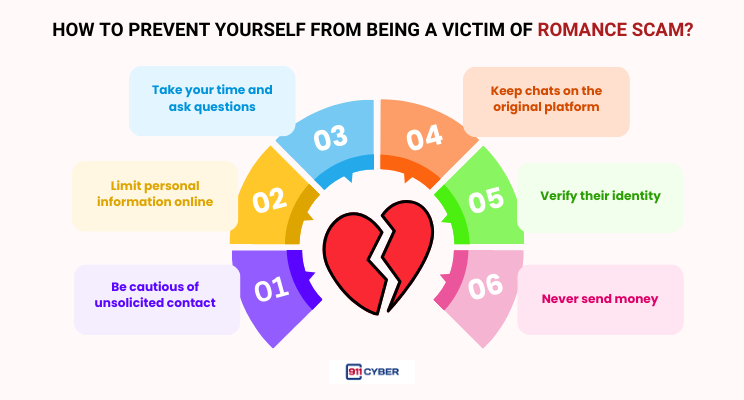
Protecting yourself from romance scams fundamentally requires a healthy dose of skepticism in all online interactions and maintaining vigilance about the information you share. Be cautious of unsolicited contact from strangers and limit the personal details you make public on social media and dating profiles, as scammers exploit this information to build trust. When developing a connection with someone online, take the relationship slowly and ask probing questions; watch for inconsistencies in their story and be wary if they quickly express strong emotions or provide excuses for why they cannot meet in person. It’s also a red flag if they push to move your conversation immediately off the platform where you met, as this can be an attempt to avoid site monitoring. Always research the individual thoroughly, including using reverse image searches on their photos, to help verify their identity and spot potential fakes.
The most critical rule to prevent becoming a romance scam victim is to never send money or financial information to someone you have only met online. This includes requests for gift cards, cryptocurrency, or asking you to handle money on their behalf for any reason. Trust your instincts: if something feels too good to be true or raises any suspicion, it likely is. Listening to that inner voice and discussing the situation with a trusted friend or family member can provide crucial perspective and help you avoid falling prey to these deceptive online predators.
If You Fall for One, What to Do?
If you suspect or confirm you have been a victim of a romance scam, take immediate action:
Do not blame yourself:
Remember that these scammers are highly manipulative and skilled at deception.
Stop all communication:
Immediately cease all contact with the individual.
Talk to someone you trust:
Share what happened with a friend or family member.
Notify the platform:
Report the scammer’s profile to the website or social media platform where you connected. This can help prevent others from being targeted.
Notify Your Bank or Credit Card Company:
If you provided payment information or lost money, contact your bank or credit card company immediately to report the fraudulent activity. They can help you dispute charges and protect your accounts.
Report to law enforcement:
File a complaint with the FBI’s Internet Crime Complaint Center (IC3) at www.ic3.gov.
You should also report the incident to your local law enforcement. Providing details of your experience, even if you can’t recover losses, can aid investigations and help protect others.
Consider Professional Help:
Engaging cybersecurity professionals might offer specialized assistance in tracing scammers’ digital activity. While recovery is not guaranteed, their findings can provide valuable evidence to support potential recovery efforts and ongoing law enforcement investigations.
How is AI Making Things Worse?
Artificial intelligence (AI) is unfortunately being leveraged by criminals to enhance and scale up romance scams, making them more sophisticated and harder to detect. They are now leveraging generative AI tools to craft highly convincing fake personas, complete with realistic profile pictures and detailed, fabricated personal histories that can easily bypass traditional verification methods like reverse image searches.
Furthermore, AI-powered chatbots enable fraudsters to automate communications, engaging victims in seemingly real-time conversations and maintaining the illusion of a genuine connection with minimal human effort. While these AI interactions may occasionally lack the complete spontaneity of natural human conversation, they can be programmed to express exaggerated or “too perfect” romantic sentiments, further manipulating the victim’s emotions.
AI can also potentially be employed for psychological profiling, helping scammers pinpoint vulnerable individuals and tailor their deceptive scripts for maximum impact. Adding another layer of deception, deepfake technology allows criminals to generate compelling AI-created audio and video content, making the scammer appear more authentic and deepening the victim’s false sense of a real relationship – though scammers may still avoid unscripted live video calls that could reveal inconsistencies. Moreover, AI translation tools are breaking down language barriers, allowing these predators to target victims across the globe.
Despite AI’s ability to streamline initial contact and conversation, human oversight is often still required to guide the AI’s output and ensure the consistency of the fabricated narrative, but the overall impact is a significant increase in the scale and persuasiveness of these devastating scams.
What resources are available to help you protect yourself against tech support scam?
📚 Books
Love or Lies: How to Spot and Avoid Romance Scams (2023) by Mirabelle Sarratt
The Internet Romance Scammers: What you need to know to avoid being scammed (2022) by Anthony Johnson
How to Avoid Romance Scams: Exposing the Thieves’ Secret Weapons and Tactics 2023 by Vivian Orgel and Stephanie Stone
Keanu Reeves Is Not In Love With You: The Murky World of Online Romance Fraud (2024) by Becky Holmes
🎙️ Podcasts
Scammer Stories by April
Mailin’ It! – A Romance Scam Turns Tragic by United States Postal Service
Dateable – True Stories of Dating App Scams by Yue Xu and Julie Krafchick
▶️ Video
🛠️ Tools
Google Safe Browsing : https://safebrowsing.google.com/
IdentityForce (A TransUnion Brand) : https://www.identityforce.com/
ScamAdviser : https://www.scamadviser.com/
💰Credit Monitoring Services
Experian : https://www.experian.com/credit/credit-monitoring/
Credit Karma : https://www.creditkarma.com/
✅ Social Media Verification tools
SEON : https://seon.io/
SocialCatfish.com : https://socialcatfish.com/
🚨 Report
Report Scam to 911Cyber : https://911cyber.app/
FTC Complaint Assistant : https://reportfraud.ftc.gov/
By staying informed and exercising caution in your online interactions, you can significantly reduce your risk of becoming a victim of a romance scam. Remember, your desire for connection is natural, but protecting yourself from those who would exploit it is essential.
Stay skeptical, stay safe.
